Showing posts with label reading. Show all posts

Books Without Words

Wednesday, August 7, 2013

I think one of my favorite things about this stage of Anouk's development is that her imagination is really starting to grow in leaps and bounds. All of a sudden, she is inventing the most hilarious conversations between her Barbies, putting plastic toys in her shoes and pretending they're airplanes, crying a pirate's "arrrr!" as I wheel her around the grocery store in her "pirate ship." (Less adorably, she will also sometimes tell people that J. and I have pinched or bitten her, which is taking it a bit far, I think). 

So lately when we go to the library or the bookstore, I've been seeking out books without words to encourage her to use her imagination to understand what's on the page instead of me reciting it to her. Every day lately, before naptime or bed, we will lay down together and she will "read" me one of her books. Below are some of our favorites, the creme de la creme of an overall great niche of the child lit genre. 
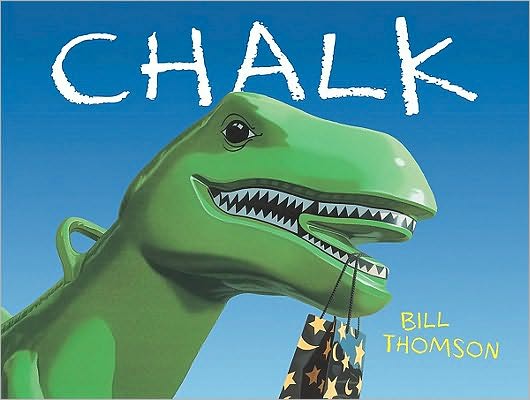


Chalk by Bill Thomson

On a rainy day, a group of friends finds a bag of magic chalk at a playground. Everything they draw comes to life, which leads to sometimes sticky situations, and the friends must scramble to draw new pictures to deal with the ones they've already drawn. Not only are the drawings in this book amazing, but the premise is a good way to introduce complicated concepts like problem solving and actions and consequences to kids who might not yet have the vocabulary to follow a verbal lesson on the subject.


Tuesday and Flotsam by David Wiesner

The beauty of Wiesner's works is that he tends to sets unfamiliar things in familiar places -- frogs floating over quiet suburban streets in Tuesday, an antique camera washed up on the beach in Flotsam -- and encourages you to go from there. Wiesner has several other books, but these two are our favorites, and I tend to buy them again and again to give as birthday presents for the kids in our crowd (spoiler alert for the few of you reading whose little ones' birthdays are upcoming). Funny, sweet, haunting and strange. A good mix.


Unspoken: A Story from the Underground Railroad by Henry Cole

The concept of slavery is still way beyond Anouk's pay grade at the moment but I brought Unspoken home as an experiment because I wanted to see how her little mind would interpret the complicated story of a white girl helping a runaway slave hide from patrolers. Unspoken is designed (it feels weird to say "written" when there are no words) well enough that she was able to get pretty close, pointing out the "bad men," understanding that the runaway character was hiding from them. I will note that she did seem to find a couple of the (beautiful, graphite) images a little disturbing, namely one of a pair of eyes peeking out from a haystack. So maybe this one isn't for the very youngest readers, but I think 4s and up should enjoy it (when we're reading it to A., we just skip that page and have no other issues).


Wave by Suzy Lee

This one is charmingly simple: A little girl and a wave play with each other at the beach. At first the two are separated, with the girl on the left pages and the wave on the right, but slowly as they jump, dance, and roll toward one another, they are drawn into the same frame. This was a fabulous book for helping A. overcome some of her fear of the ocean and just really cute overall.
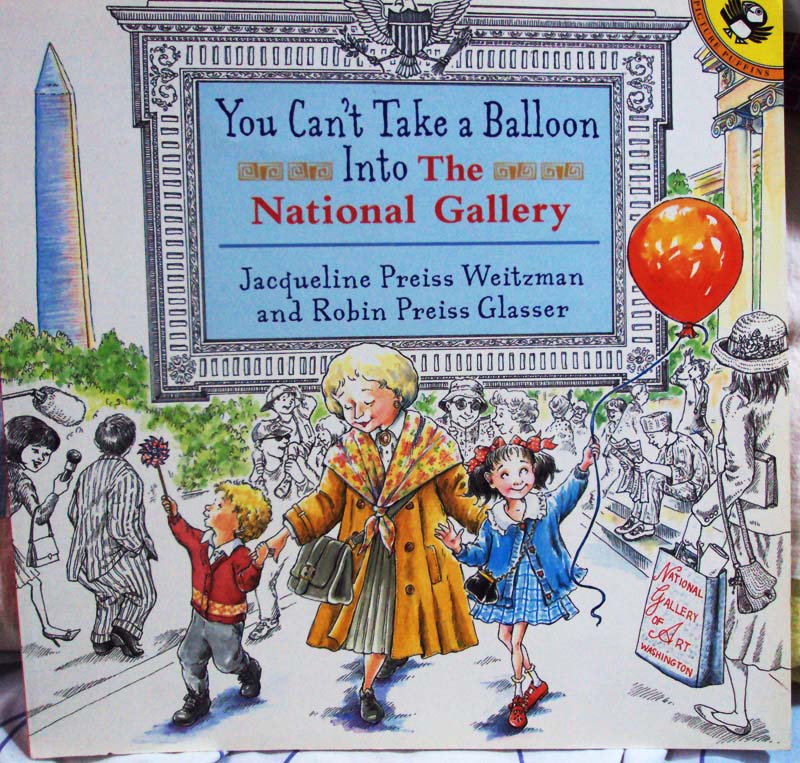


You Can't Take a Balloon into the National Gallery by Jacqueline Preiss Weitzman

A boy and girl visit the National Gallery of Art with their grandmother, and the little girl leaves her balloon outside with a bystander, who accidentally lets it go and must scramble to find it. The balloon takes him on a chase through Washington, DC, encountering all sorts of people and famous landmarks, while the children and grandmother study paintings that reflect the balloon's movement through the city. (My favorite is a George Bellows painting of a boxing match juxtaposed with an argument on the floor of the US Senate). The National Gallery was one of our favorite places to go when we lived in the DC area, and it was nice to see it again, even in book form. Plus, we also really love the fun, Eloise-y vibe.


Have you read any of these books with your kids? What are some of your favorite wordless picture books?

Pollinator Projection Project: Books about bees

Tuesday, June 25, 2013

Last week, as part of National Pollinator Week, I downloaded and signed the Xerces Society's Pollinator Protection Pledge. Basically, the pledge says that our family will take steps to make our backyard safe for populations of birds, bees, bats, and other animals that pollinate our plants. Around the world, but especially in the Southern US, pollinator populations are on the decline, which has a negative effect on almost every other part of the ecosystem (including, you know, the human part).

Over the course of the summer, we have a few projects planned -- planting some flowers, building nests, doing a little landscaping work -- that will hopefully be a step toward increasing pollinator populations in our area. I'm looking forward to sharing our work as we go!

Since we signed the pledge, Anouk and I have been looking for books that will introduce her to pollinators and give her some inkling of why we're doing this project (or at least the idea that these animals are our friends). We literally checked out dozens of books from the library last week -- we immersed ourselves in the world of bees, etc., for days. Below are some of our favorites out of that bunch.

Bee and Me by Elle J. McGuinness: When a young boy finds a bumblebee in his room, he hides in fear. However, once the bee tells him of all the good things she does (makes honey, spreads pollen), he changes his mind and the two become friends. The book features moving hologram-type illustrations which I personally find distracting but which Anouk (and every single one of her friends who sees them) loves, so what do I know? The regular old drawings are adorable enough on their own.


The Moonflower by Peter and Jean Loewer: When night falls, the moonflower vine blossoms and bats, owls, and moths come out and swoop from plant to plant. The depth of information on each species given makes it an ideal choice older kids but I like it for the younger ones because it mentions less well-known (read: cutesy) bugs and birds. A really beautiful and moody book.


Stellaluna by Janell Cannon: The story of a baby bat adopted by a family of birds highlights the differences -- and the similarities -- among these animal populations. It's sort of hard to love a bat -- they're not really very cuddly animals -- but we love Stellaluna. 


The Hungry Hummingbird by April Pulley Sayre: A hummingbird is attracted to red flowers -- but soon learns that not every red thing will be as delicious. The reader follows as the bird flits through the garden, sampling each flower (and even a bird feeder) to find the best food. This is kind of quiet book -- meaning it might not have enough excitement to it to hold a very little one's attention the whole way through -- but the beautiful and very detailed drawings make us pick it up to leaf through several times a day (and each time we notice something new hiding out in the background).


The Butterfly Count by Sneed Collard III: We found this book in a thrift store and it's kind of a cheat -- it definitely wasn't one of Anouk's top picks but I loved it enough to put it on the list anyway (mommy veto power!). I definitely think it will appeal to kids just a little older than Anne. A little girl and her mother spend a day looking for the rare regal frittillary, her great-grandmother's favorite butterfly, which is rarely seen nowadays. Besides being really informative, the book is super sweet (especially when the find the butterfly in the old family burial plot -- "the last patch of prairie in the county that was never plowed.") Besides some pretty (if slightly dated?) illustrations, the book features instructions on how to participate in the North American Butterfly Count and how to plant a butterfly garden of your own. 

What If There Were No Bees? by Suzanne Slade: This book sets young readers in a grassland, and then shows them what it would look like if there were no bees, setting off a chain reaction in which certain species are blacked out on each successive page. Because it's all connected, by the end, of course, there's not a lot left standing. It's very visually effective and affecting, even for an adult, and very clear in its language and concept.

There are many other types of pollinators -- beetles, flies, ants, shrews, even the rain -- but we thought we would keep it simple to start with (also, there aren't as many picture-book options for the less photogenic pollinator contingent). An option for older kids that covers the whole contingent is the Pollinator Activity Book put together by the University of Illinois.

What are your favorite buzzy, busy books? Are you thinking of signing the pollinator protection pledge?

Winter reading: for the littles

Friday, December 28, 2012

We missed our visit to celebrate Solstice with our DC friends last week thanks to a nasty last-minute cold that swept through our household (and infected most of our extended family -- sorry, guys). Luckily, we were feeling much better by Christmas and had a blast at home (and we hope that you did, too.)

We did manage to celebrate the longest night of the year with a roaring fire and some winter-themed books. Here are a few of our favorites.


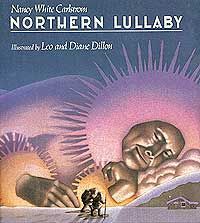
Northern Lullaby by Nancy White Carlstrom: This book was a random thrift store find and a fast favorite. It's one of the ones we come back to again and again year round but love especially to read by the fire on chilly nights. The illustrations of Native Alaskan imagery and the spare prose are haunting -- in the best way. We've read it so many times that I can recite most of the book from memory, and do, some nights, while putting Anouk to bed. "Goodnight, Sister Owl! Quiet your cry."


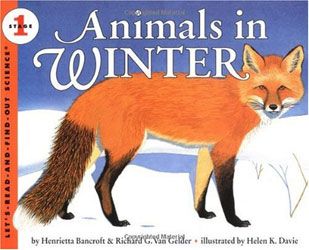
Animals in Winter by Henrietta Bancroft: This book is perfect for the scientific-minded kid who wonders what different animals do during the long, cold months of winter. From butterflies, who migrate, to woodchucks, who hibernate, to bats, some of which hang around all year, this book features drawings of habitats and clear, concise answers to questions about how real animals live in the wild.


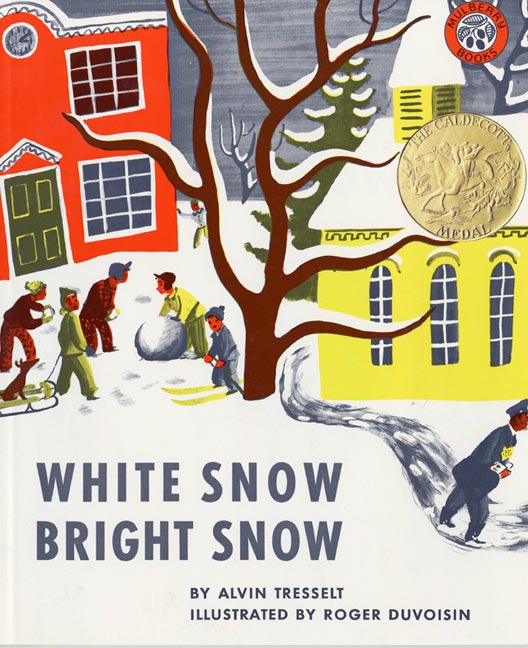
White Snow, Bright Snow by Alvin Tresselt: Sort of a flip side to Animals in Winter, White Snow, Bright Snow tells of how different types of people -- postman, policeman, schoolchildren, farmer and his wife -- deal with an impending snowstorm. They get new boots, they stock up on cough syrup, and (because this book was originally published in the 1940s) they do old-fashioned-type things like mix up mustard plasters to ward off chest colds. The language is clear and vivid and descriptive: "Automobiles looked like big fat raisins buried in snowdrifts. Houses crouched together, their windows peeking out from under great white eyebrows." And I love the vintage illustrations of village life in winter. 


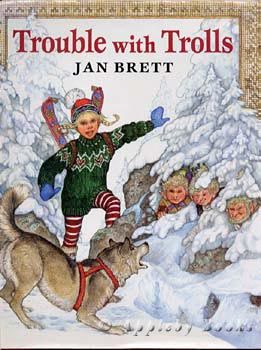
Trouble with Trolls by Jan Brett: A favorite from my own childhood -- my sister K. and I were obsessed with this book growing up. I think we love it so much because the heroine, Treva, doesn't need any help in outsmarting a band of mountain trolls to protect her dog, Tuffi -- she does it through a lot of quick thinking and hard work. Another reason might be the beautiful illustrations of the snowy Norwegian landscape and traditional clothing (K. visited Norway a week after A. was born and brought her back an authentic "Trouble with Trolls" dress -- she wore it in our Christmas card photo on the beach this year).


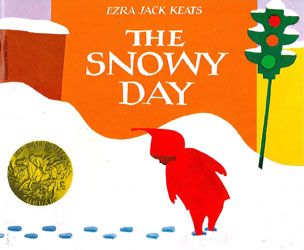
The Snowy Day by Ezra Jack Keats: A little boy named Peter steps out of his apartment building and spends the day exploring the snowy city streets. He finds a stick, makes snow tracks, and puts a snowball in his pocket to try to keep the fun from ending. The Snowy Day won the Caldecott medal in 1963, and has the honor of being one of the first childrens' books to feature an African-American child as the main character. (To read a little more about the story behind this groundbreaking book, click here).


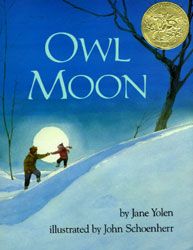
Owl Moon by Jane Yolen: Another childhood favorite, about a girl and her father, who go off in search of a Great Horned Owl on a cold winter's night. Along the way they are watched by quiet animals -- deer, fox, fieldmouse -- moving through the dark woods. The enture story is illsutrated from an "owls-eye view" from above, a neat trick that helped Owl Moon win the 1988 Caldecott.

____________

Have you and your kids read any of these books? What did you think of them? Do you have any wintertime book recommendations you'd like to share? We are always on the lookout for new favorites.

Blog Design by Nudge Media Design | Powered by Blogger